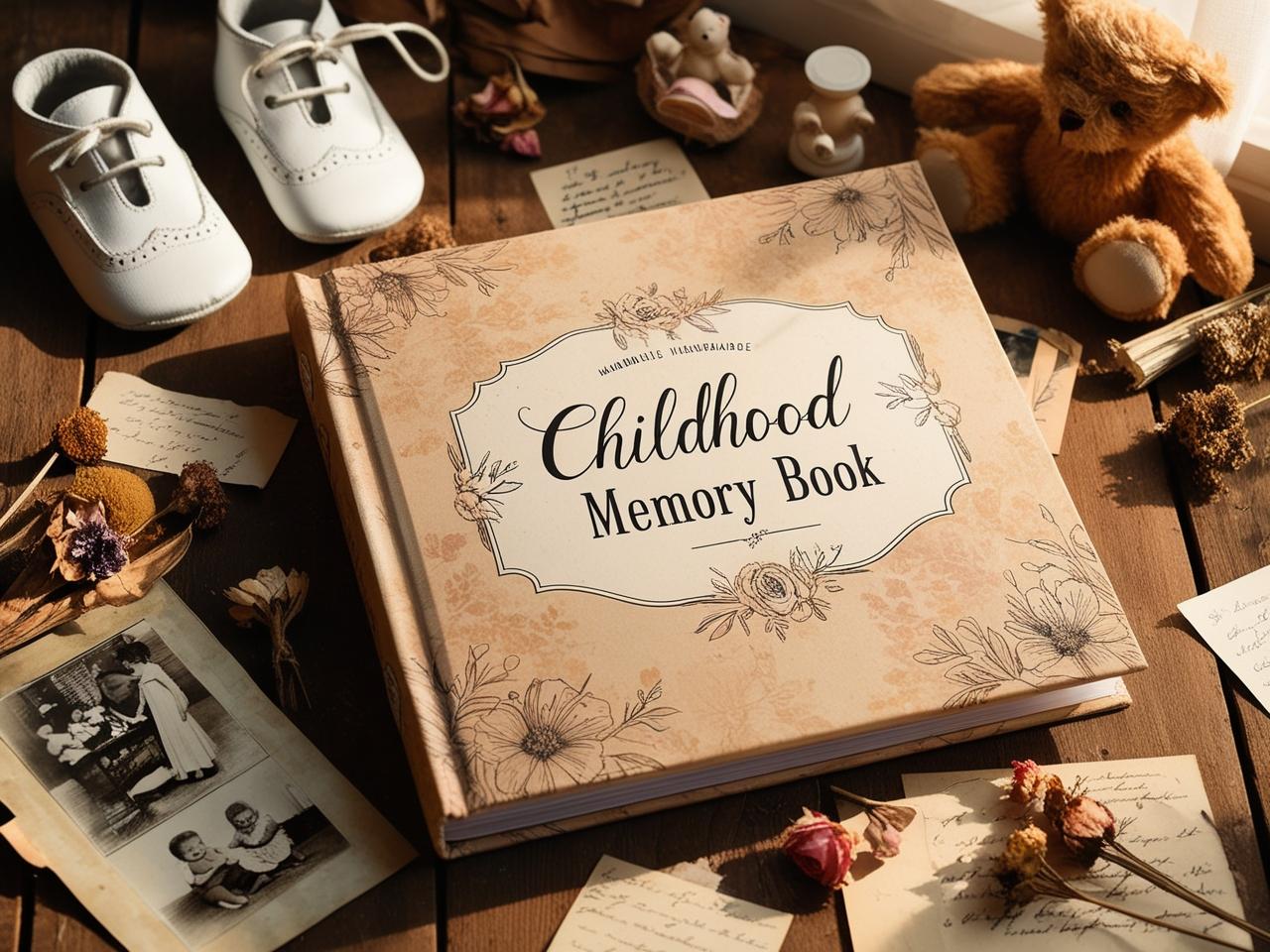
Keeping childhood memories alive is a special tradition for families. It helps them hold onto the brief moments of youth and strengthens bonds. Making a personalized memory book for your child is a touching way to record their growth from babyhood to teenage years. It captures the key moments, achievements, and special times that shape their life.
This guide will show you how to make a beautiful keepsake that celebrates your child’s childhood story. As you start this heartfelt project, you’ll learn different methods, materials, and creative ideas. You’ll find out how to pick the right format and binding, and how to arrange photos and keepsakes. This guide will give you all you need to create a memory book that will be treasured by your family for years to come.

Key Takeaways
- Preserving childhood memories through personalized memory books builds lasting family connections.
- Documenting your child’s journey from infancy to adolescence creates a cherished keepsake.
- Explore various formats, materials, and creative ideas to craft a unique and meaningful memory book.
- Organize photos and memorabilia chronologically to tell your child’s story in a cohesive way.
- Include milestone moments, achievements, and special events to capture the essence of your child’s growth.
Understanding the Importance of Preserving Childhood Memories
Keeping childhood memories in a memory book is great for kids and parents. It helps in many ways. It’s good for the mind, strengthens family ties, and creates a special family treasure.
The Psychological Benefits of Memory Books
Memory books can really help a child’s emotional health and sense of self. They let kids see their past and understand who they are. This can make them feel better about themselves and their childhood.
Building Family Bonds Through Shared Stories
Memory books help families talk and share old stories. This makes family bonds stronger. It also helps families understand each other better and creates a lasting legacy. These stories help families stay close over time.
Creating Future Family Heirlooms
A memory book is more than photos and stories. It’s a piece of a family’s history and traditions. These books become precious family treasures, passed down through generations. They help families feel connected to their past and each other.
“A family’s story is its legacy, and a memory book is the perfect way to preserve and pass it down.”
Essential Supplies and Materials for Your Memory Book Project
Making a childhood memory book needs the right tools and materials. Acid-free paper and archival-quality pens are key. They help keep your memories safe. Let’s look at the scrapbooking supplies, archival-quality materials, and memory book tools you’ll need to make a lasting family treasure.
At the core of your book is acid-free paper. It’s strong and keeps your memories from fading. Use archival-quality adhesives and pens to keep your work looking bright and clear for years.
Add joy and nostalgia with decorative elements. Use scrapbooking supplies like stickers, washi tape, and shapes. These details make your book a masterpiece, celebrating your child’s special moments.
Protect your book with sleeves, photo corners, and storage. These memory book tools keep your pages safe and make it easy to show off your memories.
| Supplies | Benefits |
|---|---|
| Acid-free paper | Prevents discoloration and deterioration |
| Archival-quality pens and adhesives | Ensures long-lasting vibrancy and preservation |
| Decorative scrapbooking elements | Adds personal touch and visual interest |
| Protective sleeves and storage solutions | Safeguards keepsakes for future generations |
Choosing the right scrapbooking supplies, archival-quality materials, and memory book tools makes a book that tells your child’s story. It’s a keepsake filled with love, ready to last for years.
Choosing the Perfect Memory Book Format and Style
Starting a memory book for your child is an exciting journey. You’ll need to decide between digital or physical formats. Each has its own benefits that can make your memory book special.
Digital vs. Physical Memory Books
Digital scrapbooking is easy and flexible. You can use software to design your child’s book with many layouts and multimedia. It’s great for organizing and sharing, and you can update it anytime.
A physical book, on the other hand, offers a real touch to memories. You can choose from many types, like leather or wire-bound. It’s a timeless choice that lets you add personal touches like handwritten notes.
Different Binding Options and Durability
The binding of your book affects its look and life. Spiral binding is good for adding or removing pages, while ring binders have a classic feel. For a premium look, sewn or lay-flat binding is best. It keeps your book together over time.
Size and Page Count Considerations
Think about the size and number of pages you need. Consider how much content you’ll include and how you want it to look. A bigger book can hold more, but a smaller one might be easier to handle.
| Format | Pros | Cons |
|---|---|---|
| Digital Scrapbooking | Convenient and versatile design options Effortless organization and updates Easy digital sharing | Lack of physical, tangible experience Potential for digital file corruption or loss |
| Physical Memory Book | Tactile and emotional connection Variety of binding options and durability Ability to incorporate unique embellishments | Limited flexibility for updates and additions Potential space constraints for storage |
Choosing between digital and physical depends on your preferences and needs. Think about what you want your memory book to be. By considering the pros and cons, you’ll make a book that truly captures your family’s memories.
For my daughter, I’ve really enjoyed the Promptly Journals Childhood History memory book – you can document all of their memories from pregnancy through 18 years and it’s so easy to keep up with.
Create a Childhood Memory Book for Your Child: Step-by-Step Guide
Keeping your child’s memories safe is a touching and fulfilling task. You can make a DIY memory book or try scrapbooking. This guide will help you make your dream come true. We’ll walk you through every step, from planning to finishing, to make it fun and easy.
Gather Your Supplies
First, get all the things you need for your memory book. This includes a scrapbook, safe adhesives, pretty papers, stickers, and any special items. Having everything ready will make putting your book together a breeze.
Select and Prepare Your Photos
Pick the photos that show your child’s best moments. Arrange them in order and think about how to design each page. You might need to cut, resize, or edit photos to make them look great together.
Design and Assemble Your Pages
It’s time to start making your book! Sketch out a plan for each page. Think about where to put photos, captions, and decorations. Try out different ways to arrange things, like layering and using special tools.
Incorporate Mementos and Keepsakes
Include more than just photos in your book. Add things like ticket stubs, drawings, or notes. Choose these items carefully and find creative ways to add them to your pages.
Finish with Final Touches
As you finish, add the special touches that make your book unique. This could be personal captions, borders, or journaling that tells your child’s story.
By following these steps, you’ll create a precious memory book for your family. It will be a keepsake that lasts forever.
Organizing Photos and Memorabilia Chronologically
Creating a memory book for cherished childhood memories is a touching task. It’s important to organize photos and memorabilia well. Arranging them in order can make your child’s story come alive.
Dating and Labeling Systems
Start by setting up a good dating and labeling system. Use photo sleeves or envelopes with the date, location, and event written on them. Or, make a list or spreadsheet for each item. This way, your memory book will flow smoothly through the years.
Storage Solutions for Precious Items
It’s crucial to keep memorabilia safe when making a family heirloom. Use acid-free and lignin-free storage like archival boxes and folders. This keeps fragile items like artwork and report cards safe. Good photo organization and storage help keep memories in great condition for a long time.
Creating Timeline Categories
- Milestone Moments: First steps, first words, birthdays, and other significant events
- Timeline Creation: Organize items chronologically by year or by age to visually track your child’s growth and development
- Themed Sections: Group related memories, such as holidays, vacations, or school years, to create a cohesive narrative
By carefully organizing your photos and memorabilia, you’ll make your childhood memory book truly special. It will become a treasured family heirloom that celebrates your child’s unique story.
| Organizing Technique | Key Benefits |
|---|---|
| Chronological Arrangement | Tracks child’s growth and development over time |
| Themed Sections | Enhances narrative flow and storytelling |
| Archival Storage Solutions | Preserves delicate items for long-term safekeeping |
“Organizing your childhood memories into a cohesive book is a gift that will be cherished for generations.”
Writing Meaningful Captions and Stories
Making your child’s memory book come alive is all about the captions and stories. This guide will show you how to use journaling techniques and prompts to capture memories. You’ll learn to tell your child’s story in a way that complements their photos and keepsakes.
Journaling Techniques for Memorable Storytelling
Journaling is a great way to keep your child’s memories alive. Try out different journaling techniques to find what works best for you and your child. Whether it’s writing freely or using prompts, there are many ways to tell your child’s story.
- Free-write about a specific event or milestone, letting the words flow naturally.
- Use sensory-rich descriptions to transport the reader back in time.
- Experiment with creative writing styles, such as poetry or short vignettes.
- Incorporate personal reflections and emotional connections.
Storytelling Tips for Captivating Narratives
Good storytelling grabs the reader’s attention and brings memories to life. Here are some tips to make your stories engaging:
- Focus on specific, memorable moments rather than broad summaries.
- Use vivid details to paint a vivid picture in the reader’s mind.
- Incorporate the voices and perspectives of your child, family, and friends.
- Highlight the emotions and personal significance behind the stories.
Preserving the Essence of Childhood Memories
The magic of a childhood memory book is in its ability to preserve the essence of your child’s experiences. By crafting meaningful captions and stories, you’ll create a lasting legacy for your family.
“The power of a memory book lies in its ability to transport us back to the moments that have shaped our lives.”
Start your journey of memory preservation and let your child’s story unfold. One captivating caption and heartfelt narrative at a time.

Including Milestone Moments and Achievements
Recording your child’s milestones and achievements is a special part of making a memory book. This section will show you how to add educational achievements, personal growth, and special celebrations. By documenting these moments, you’ll create a collection of memories for your family to enjoy for years.
Educational Milestones
Academic progress is key in a child’s growth, and your memory book should highlight it. Consider including items like:
- First day of school photos
- Report cards and awards
- Samples of schoolwork or art projects
- Certificates of achievement
Personal Development Markers
Your child’s memory book should also show their personal growth. Highlight moments such as:
- Learning to ride a bike
- Losing their first tooth
- Overcoming a fear or challenge
- Discovering a new hobby or talent
Special Events and Celebrations
Birthdays, holidays, and other special occasions are memories to be cherished. Document these milestones with:
| Milestone | Keepsake Ideas |
|---|---|
| Birthday parties | Party invitations, photos, and crafts |
| Family vacations | Souvenirs, tickets, and travel photos |
| Holidays | Decorations, cards, and tradition-related items |
By capturing these milestones, you’ll make a memory book that celebrates your child’s journey. It will highlight the special moments that shaped their growth and development.
With our family, we’ve started keeping a Holiday Memory Book and I love how we’ll be able to follow how our celebrations have evolved and which traditions we keep each year.
Incorporating Artwork and School Projects
Keeping children’s art and school memorabilia is a touching way to remember their school and creative journeys. We see our kids grow into young artists, their creativity shining through in their drawings and projects. These keepsakes should have a special spot in our memory book, celebrating their growth and achievements.
Here are some creative ways to add your child’s artwork and school projects to the memory book:
- Photograph 3D projects, like clay sculptures or dioramas, to keep their original look and feel.
- Scan or photograph two-dimensional artworks, like paintings and sketches, for high-quality copies.
- Mount original drawings or writings carefully, making sure they last for years.
- Arrange your child’s artwork in order from oldest to newest, showing their growth over time.
- Add school assignments, like creative writing or science fair projects, to mark their academic achievements.
By carefully adding these school memorabilia and creative displays, you’ll make a treasured memory book. It will celebrate your child’s unique talents and keep the special moments of their childhood alive.

| Type of Artwork | Preservation Technique | Benefits |
|---|---|---|
| 3D Projects | Photograph original form | Captures the texture and dimensionality of the project |
| 2D Drawings and Paintings | Scan or photograph high-quality reproductions | Preserves the original artwork without damage |
| Written Assignments | Cut out and mount original work | Showcases the child’s academic progress and development |
Adding Interactive Elements and Keepsakes
Making a childhood memory book is more than just putting photos and mementos in it. It’s about making an experience that shows what your child’s early years were like. Adding interactive parts and keepsakes makes your book a hands-on, engaging piece that families will love for years.
Pocket Pages for Special Items
Pocket pages in your memory book are great for keeping safe items that are special to your child. You can put in things like letters, cards, and ticket stubs from fun times. These pockets make it easy to show off interactive scrapbooking pieces that tell your child’s story.
Preserving 3D Objects
Memory books can also hold three-dimensional keepsakes that show what your child’s childhood was like. You can use special boxes or clear cases to keep things like trophies and small toys safe. This makes the book a real experience for anyone who looks at it.
Including Letters and Cards
Handwritten messages from family and friends are very special and should be in your child’s memory book. Things like birthday cards and congratulatory notes show the love and support your child had. These messages will remind everyone of the care and love that was around your child when they were young.
| Interactive Element | Benefits | Preservation Techniques |
|---|---|---|
| Pocket Pages | Secure storage for delicate items | Acid-free materials, clear plastic sleeves |
| 3D Keepsakes | Showcase unique childhood mementos | Shadow boxes, clear enclosures |
| Letters and Cards | Preserve personal messages | Acid-free paper, transparent sleeves |
By adding these interactive parts and keepsakes, you’ll make a memory book that really shows what your child’s early years were like. This book will be a lasting treasure that your family will enjoy for many years.
Tips for Long-term Preservation and Storage
Keeping your childhood memory book safe for future generations is a big task. It’s key to use archival storage and preservation techniques to protect your memory book maintenance. Follow these expert tips to keep your family treasure safe and pass it down with joy.
- Choose Acid-Free Materials: Pick archival-quality paper, albums, and sleeves for your memory book. Stay away from materials with harmful acids that can damage your keepsakes over time.
- Control the Environment: Keep your memory book in a cool, dry, and dark place. Sunlight, heat, and humidity can harm it. Think about getting a special storage cabinet or box to keep the conditions right.
- Handle with Care: Try to avoid touching your memory book too much to prevent damage. Wear clean, white cotton gloves when you need to handle it to avoid oils and residue.
- Digitize for Backup: Make digital copies of your memory book pages and store them online. This way, you’ll have a backup in case something happens to your physical book.
| Preservation Technique | Description | Benefit |
|---|---|---|
| Acid-Free Materials | Using archival-quality paper, albums, and sleeves to store the memory book. | Prevents discoloration and degradation of the keepsakes over time. |
| Environmental Control | Maintaining a cool, dry, and dark storage environment for the memory book. | Protects the book from damage caused by light, heat, and humidity. |
| Careful Handling | Limiting access and wearing gloves when handling the memory book. | Minimizes wear and tear, and prevents oils and residue from transferring to the delicate surfaces. |
| Digital Backup | Scanning the memory book pages and storing digital copies in a secure, cloud-based platform. | Provides a backup in case of any unforeseen accidents or disasters affecting the physical memory book. |
By using these preservation techniques, your childhood memory book will be a treasured family heirloom for years to come. Invest in archival storage and memory book maintenance to keep your memories safe.
Creative Ideas for Regular Updates and Additions
A childhood memory book is a project that grows with your child. This section will show you how to keep it fresh and exciting. Learn how to add new things and keep the design consistent.
Start by setting aside time each year to update your book. Use your child’s birthday or the start of school to do this. This way, you can add the year’s best moments. Make sure to leave some blank pages for these updates to keep the book flowing smoothly.
Try making memory book scrapbooking a regular thing. Collect new photos, artwork, and keepsakes to add to the book. This keeps the book real and lets your child help with the updates. It makes the book a shared project that grows together.
FAQ
What is the purpose of creating a childhood memory book?
A childhood memory book is more than just a keepsake. It keeps memories alive, strengthens family bonds, and becomes a treasured family heirloom. It also boosts a child’s sense of identity and self-esteem. Plus, it helps families connect on a deeper level.
What essential supplies and materials are needed for a memory book project?
Choosing the right supplies is key for a lasting memory book. You’ll need acid-free paper, archival-quality pens, and photo-safe adhesives. Decorative elements add a personal touch. High-quality supplies ensure your book lasts and protects your memories.
What format and style options are available for a childhood memory book?
You can pick between digital and physical formats, each with its own benefits. Scrapbooks and custom books vary in durability. Consider your family’s needs and design preferences when choosing size and page count.
How can I effectively organize photos and memorabilia in a chronological order?
Organizing your memory book is crucial. Use dating, labeling, and timeline categories to arrange items chronologically. Store delicate items properly to keep them safe for years to come.
What are some tips for writing meaningful captions and stories for the memory book?
Captions and stories bring your memory book to life. Use journaling, prompts, and storytelling tips to capture special moments. This way, you create a beautiful life story for your child.
How can I incorporate my child’s artwork and school projects into the memory book?
Include your child’s artwork and school projects to make the memory book special. Photograph 3D projects, preserve drawings, and showcase their growth and achievements. This highlights their artistic and academic journey.
What interactive elements and keepsakes can I add to the memory book?
Interactive elements and keepsakes enrich your memory book. Create pocket pages, preserve 3D objects, and include letters and cards. This makes the book an immersive experience for everyone.
How can I ensure the long-term preservation and storage of the memory book?
Keeping your memory book safe for the future is essential. Use proper storage, consider environmental factors, and follow maintenance tips. This protects your book from damage and ensures it’s enjoyed by generations to come.
How can I regularly update and add to the memory book as my child grows?
A memory book is a growing project. Update it with new experiences and milestones. This keeps the book engaging and relevant as your child grows up.
Leave a Reply